
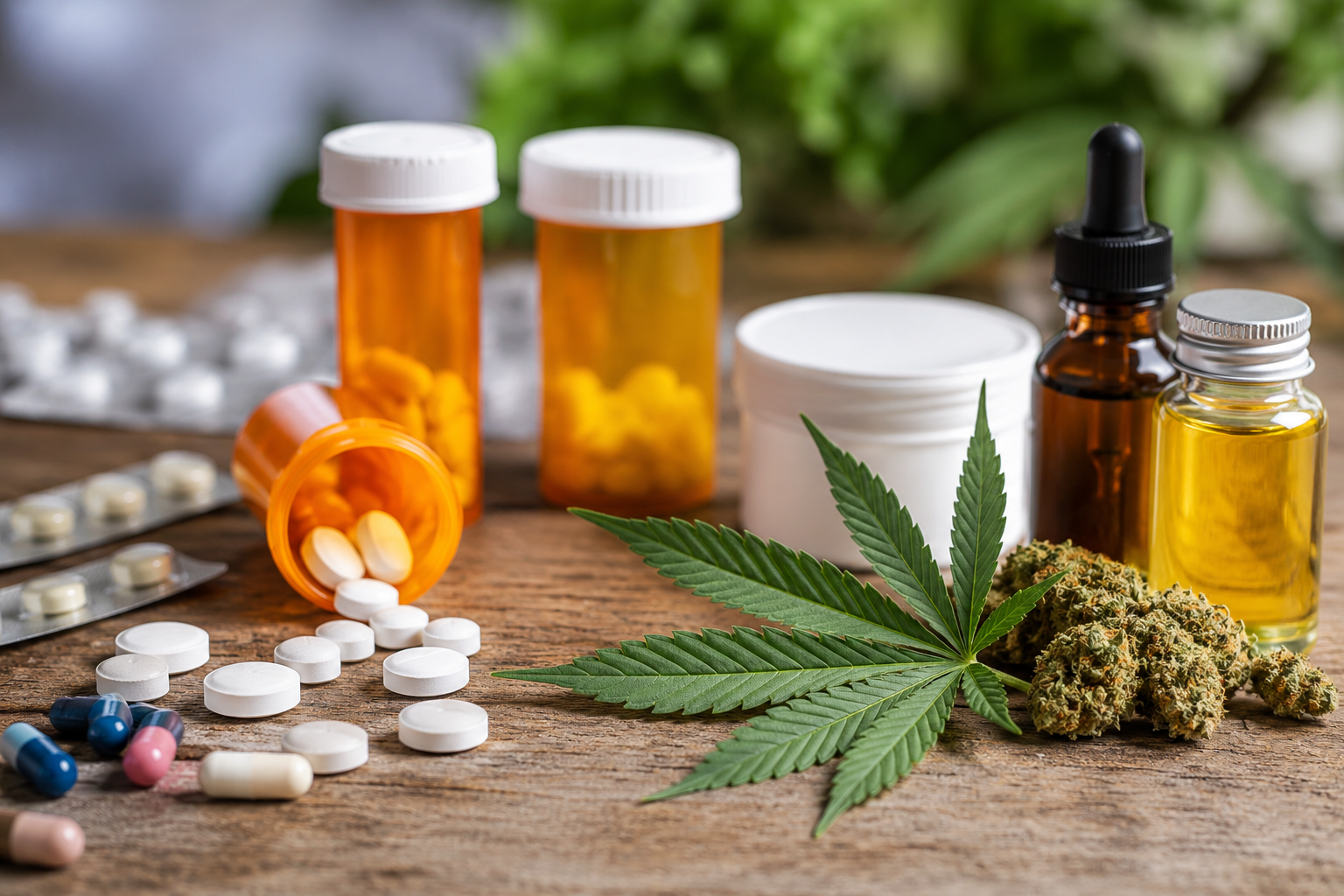
Cannabis can interact with several medications, including blood thinners, sedatives, antidepressants, seizure drugs, and certain heart medications. These interactions may change how a medicine works or increase unwanted effects.
Understanding which drugs can cause problems helps people spot potential risks before combining cannabis with their regular medications.
Does Medicine Interact with Cannabis?
Yes. Cannabis can interact with certain medicines because THC and CBD can affect enzymes that help the body process many prescription drugs.
In a 2024 systematic review, Nachnani and colleagues found documented interactions involving 16 medications with a narrow therapeutic index, with warfarin, valproate, tacrolimus, and sirolimus among the most frequently reported. The researchers linked these interactions to effects such as altered drug levels and an increased risk of adverse reactions.
What are the Side Effects of Combining Medicine with Marijuana?
Combining marijuana with certain medicines can intensify side effects or change drug levels in the body. The exact reaction depends on the medication, cannabis product, dose, and cannabinoid content.
Possible effects include:
- Increased drowsiness or dizziness
- Changes in alertness and concentration
- Greater bleeding risk with some blood thinners
- Nausea or other digestive problems
- Unexpectedly high or low medication levels
These effects can become more serious with drugs that require precise blood concentrations.
Related Article: CBD Vs THC Differences: 6 Major Points to Note
Specific Medications that Interact with Cannabis
Several prescription medicines can interact with cannabis, especially products containing THC or CBD.
1. Warfarin
Warfarin may interact with THC and CBD because cannabinoids can interfere with enzymes involved in warfarin metabolism. This effect can raise the international normalized ratio, or INR, and increase bleeding risk.
A review published in Basic & Clinical Pharmacology & Toxicology identified reports of elevated INR and bleeding after cannabis use in people taking warfarin.
2. Clobazam
CBD can raise levels of N desmethylclobazam, the active metabolite of the seizure medication clobazam. Higher concentrations can increase sleepiness and sedation.
Clinical research has found substantial increases in this metabolite after patients added CBD to clobazam treatment.
3. Valproate
Taking CBD with valproate can place additional strain on the liver. Researchers have reported higher liver enzyme levels among patients who used both drugs, which makes liver function monitoring especially important during treatment.
4. Tacrolimus
CBD can increase tacrolimus concentrations by slowing the pathways that metabolize the drug. This matters because tacrolimus requires tightly controlled blood levels after organ transplantation.
A clinical trial found that CBD increased tacrolimus maximum blood concentrations more than fourfold.
5. Topiramate
CBD may increase topiramate levels in people receiving treatment for seizures. Research has documented measurable changes in serum concentrations as CBD doses increased, although average levels generally remained within accepted therapeutic ranges.
6. Rufinamide
Rufinamide concentrations can also rise during CBD treatment. The interaction may affect how much of the medication circulates in the bloodstream, so clinicians may monitor drug levels when patients use both substances.
7. Zonisamide
Studies have found increased zonisamide concentrations in adults taking CBD. The clinical impact can differ between patients, but changes in blood levels may influence side effects or the amount of medication needed.
8. Sirolimus
Cannabinoids may alter sirolimus concentrations by affecting enzymes that process the medication. Since sirolimus has a narrow therapeutic range, unexpected changes can increase the risk of toxicity or reduce treatment control.
What to Do If You Want to Use Medicine with Cannabis
Talk to a doctor or pharmacist before combining cannabis with any prescription or over the counter medicine. The FDA specifically recommends discussing CBD use with a healthcare provider because CBD can increase or decrease the effects of other medications.
Before the appointment, prepare details about:
- Every prescription and nonprescription medicine taken
- Vitamins, supplements, and herbal products
- The cannabis product and its THC or CBD content
- How often cannabis is used
Do not stop a prescribed medication or change its dose without medical guidance. A doctor may recommend avoiding cannabis, adjusting treatment, checking drug concentrations, or monitoring for side effects based on the specific combination.
Seek medical advice promptly if new or unusually severe symptoms develop after combining cannabis with medicine. Extra caution matters with medications that require careful blood level control or can cause significant sedation.
Situations Where It’s Okay to Use Cannabis with Medicine
Using cannabis with medicine may be appropriate after a doctor or pharmacist checks the combination and finds the risks manageable.
Safer situations generally involve:
- No known significant drug interaction
- A controlled cannabis dose
- Medical supervision when monitoring is necessary
Do not assume a combination is safe based on the absence of immediate side effects. THC and CBD can affect how some medicines work.
Frequently Asked Questions
Can the method of cannabis use affect medication interactions?
Yes. Smoking, vaping, eating, or taking cannabis orally can change how quickly cannabinoids enter the body and how long their effects last. This can influence the timing and intensity of a drug interaction.
How long should you wait between taking medicine and using cannabis?
There is no universal waiting period. THC, CBD, and medications can remain active in the body for different lengths of time, so separating their use by a few hours does not necessarily prevent an interaction.
Can cannabis interact with over the counter medications?
Yes. Some nonprescription medicines can interact with cannabis. Products that cause sleepiness, such as certain antihistamines and sleep aids, may produce stronger effects when combined with cannabis.
Does the amount of THC or CBD affect interaction risk?
Yes. Higher cannabinoid exposure can increase the potential for drug interactions. THC and CBD also affect the body differently, so two cannabis products may carry different risks even when someone takes the same medication.
Can cannabis interact with herbal supplements?
Yes. Cannabis and certain herbal products may affect similar enzymes or produce overlapping effects. Combining products that cause drowsiness, for example, may further reduce alertness.
Can older adults have a higher risk of cannabis drug interactions?
Yes. Older adults often process medicines differently and may take several drugs at the same time. These factors can increase the chance of clinically important interactions with cannabis.
Closing Thoughts
Cannabis can interact with medications in ways that affect their safety and effectiveness. Always discuss cannabis use with a doctor or pharmacist before combining it with any medicine.


